The best dual monitor arms depend on your screens, desk and preferred layout, from side-by-side positioning to a vertical stack. These four HUANUO options cover compact displays, taller setups and heavier monitors, so check each arm’s limits and mounting fit before choosing.
Quick Top Products
HUANUO FlowLift Dual Monitor Stand
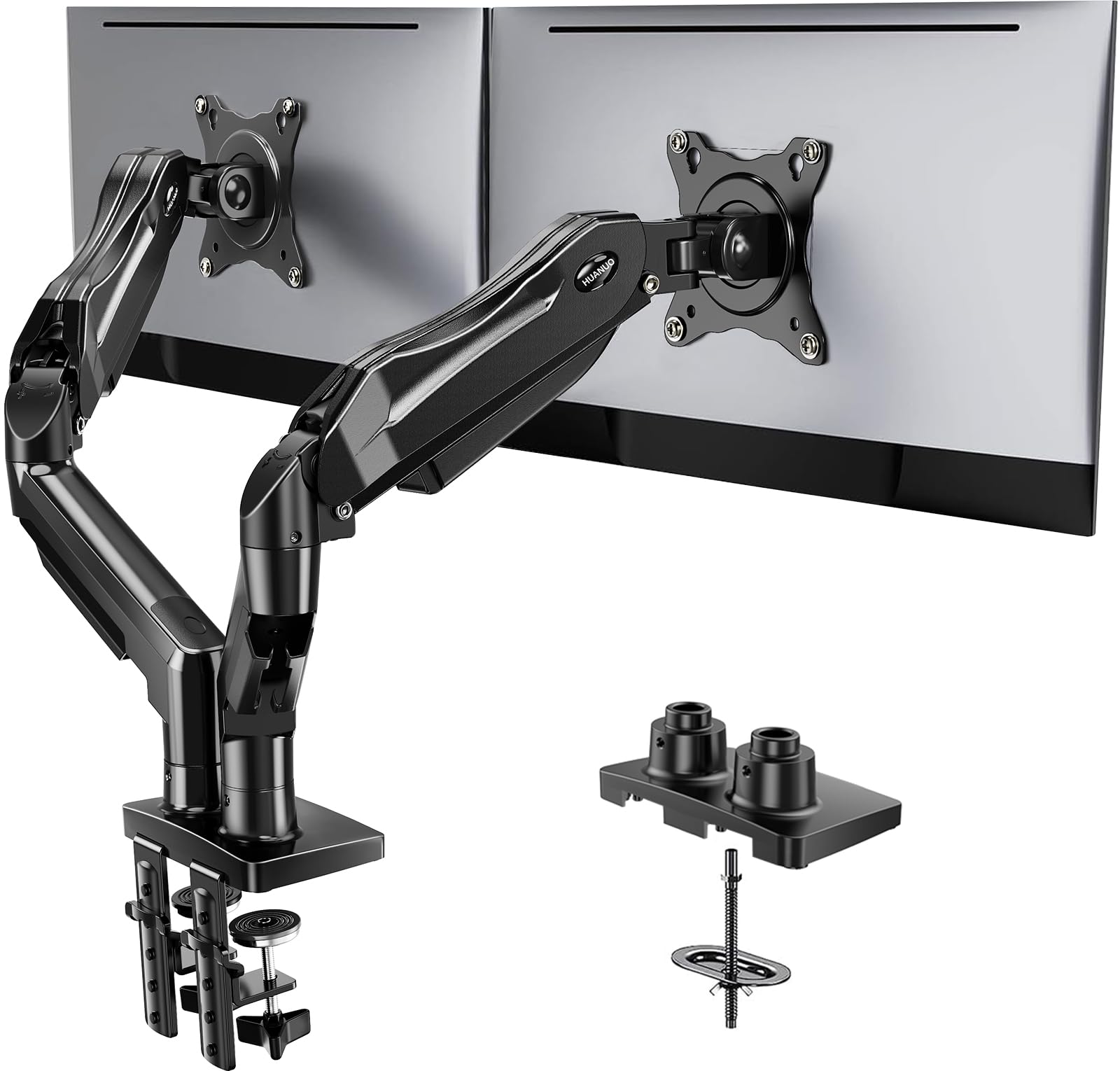
- Fits two 13 to 32 inch VESA monitors, each weighing 4.4 to 19.8 pounds.
- Supports tilt, swivel, 360-degree rotation and up to 15.75 inches of height adjustment.
- Offers C-clamp or grommet mounting and built-in cable management.
Best For: Side-by-side displays up to 32 inches on a compatible wooden desk.

HUANUO 17–32-Inch Stacked Monitor Mount
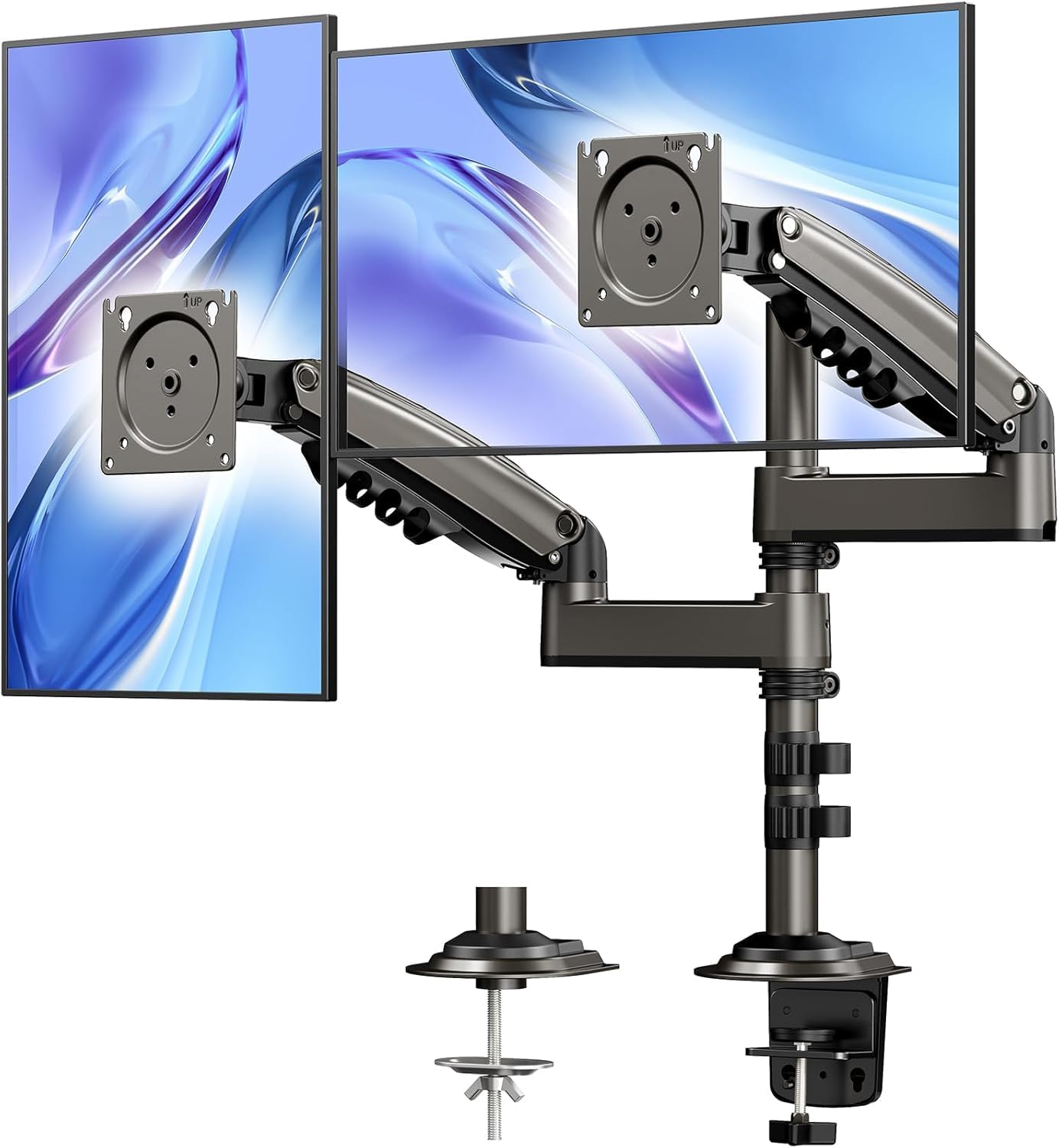
- Stacks two VESA monitors up to 32 inches and 19.8 pounds each.
- Raises monitors up to 25.19 inches with tilt, swivel and full rotation.
- Supports C-clamp or grommet mounting and integrated cable management.
Best For: A vertical two-screen arrangement with extra monitor height.
HUANUO HNDS7 Dual Monitor Mount
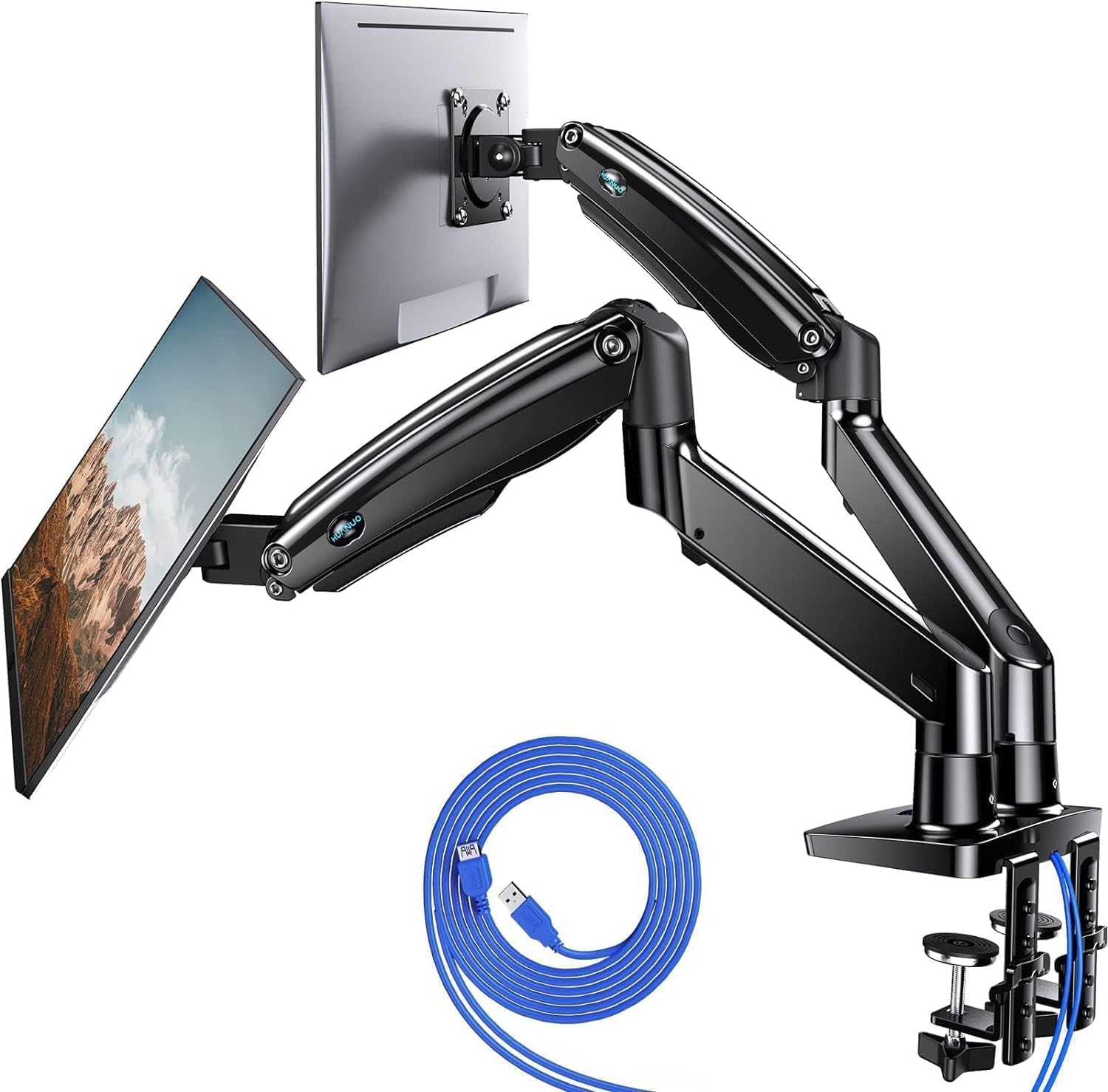
- Supports two 13 to 40 inch monitors up to 26.4 pounds per arm.
- Arms raise up to 21.1 inches and extend up to 25.59 inches.
- Includes two USB ports and clamp or grommet mounting.
Best For: Two larger or heavier displays, with built-in USB ports for desk access.
HUANUO FlowLift Pro Dual Monitor Mount
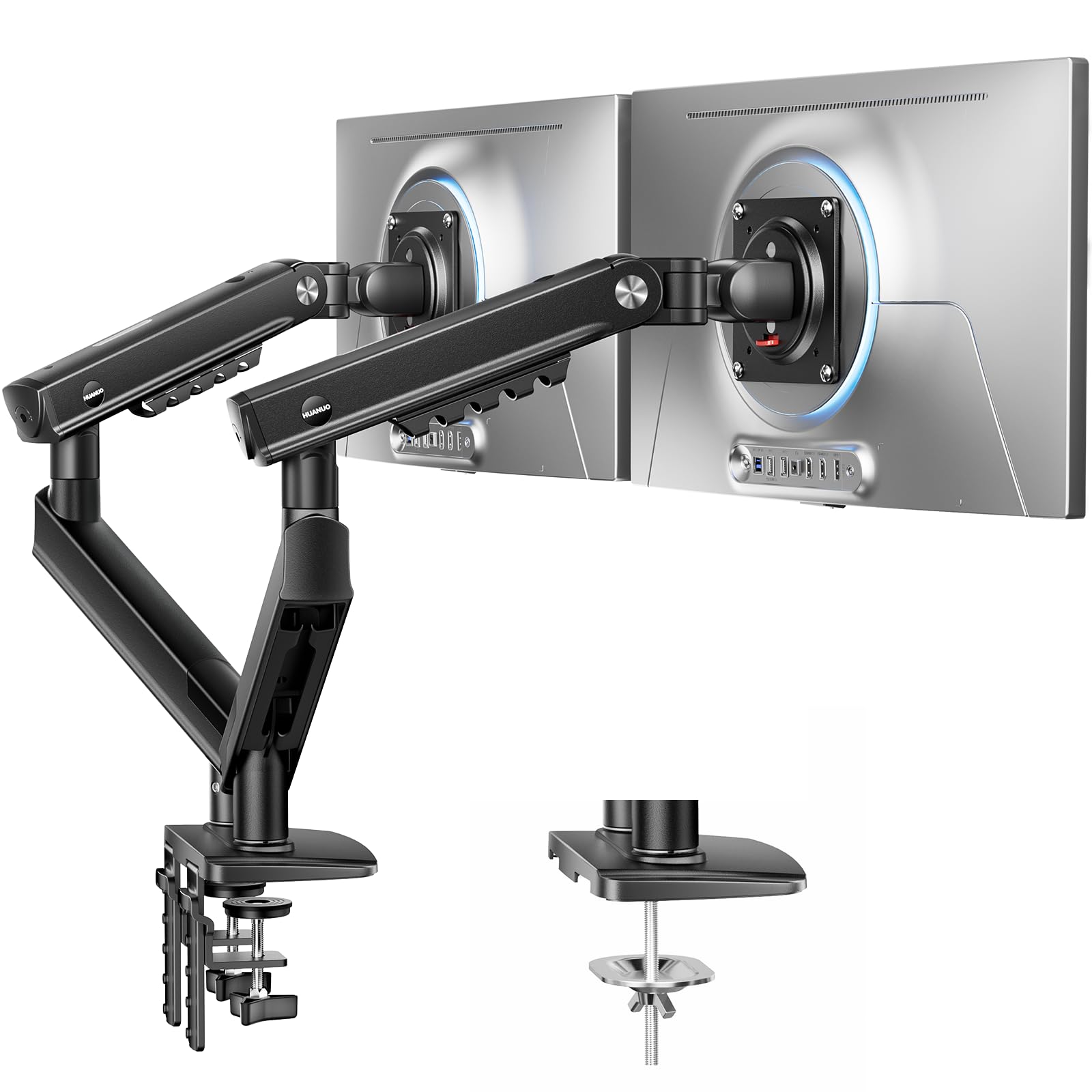
- Fits two 13 to 27 inch monitors weighing 4.4 to 15.4 pounds each.
- Uses tool-free InstaMount VESA plates and a visible tension indicator.
- MechaSpring arms support adjustment on a compatible wooden desk.
Best For: Two lighter monitors up to 27 inches that need frequent adjustment or quick mounting.
Full-motion side-by-side setup
HUANUO FlowLift™ Dual Monitor Stand, Fully Adjustable Gaming Monitor Desk Mount for 13–32″ Computer Screens, Full Motion VESA 75x75/100x100 with C-Clamp & Grommet Base, Each Arm Holds 4.4 to 19.8 lbs
The HUANUO FlowLift supports two 13 to 32 inch monitors, with each screen weighing 4.4 to 19.8 pounds and using a 75x75 or 100x100 mm VESA pattern. Its arms tilt, swivel and rotate, and raise screens up to 15.75 inches.
C-clamp and grommet mounting give you two attachment options, while built-in cable management routes cords along the arms. This can suit a drawing or editing desk where you want to reposition screens and reclaim desktop space.
Check the desk carefully: the recommended surface is wood, 0.59 to 3.54 inches thick, with no underside cross beams or panels in the mounting area.
Best For: Side-by-side displays up to 32 inches on a compatible wooden desk.
| Pros | Cons |
|---|---|
|
|
Choose the FlowLift if your two displays fit its 13 to 32 inch and 4.4 to 19.8 pound range, and you want full-motion positioning without a vertical pole arrangement. Its maximum height is lower than the HUANUO stacked model’s, so consider another option if placing one screen well above the other is central to your setup.
Before buying, confirm VESA compatibility and that the desk edge and underside leave room for the clamp or grommet mount.
Tall vertical monitor stack
HUANUO 17-32 Inch Dual Monitor Stand, Vertical Dual Monitor Mount, Monitor Stand 2 Monitors, Ergonomic Adjustable Tilt/Swivel/Rotate, Weight Max 19.8 lbs, VESA 75/100mm
This HUANUO mount places two monitors in a vertical stack and raises them up to 25.19 inches. It fits screens up to 32 inches, with each weighing 4.4 to 19.8 pounds and using a 75x75 or 100x100 mm VESA pattern.
Tilt, swivel and 360-degree rotation let you adjust the viewing angle of each screen. C-clamp and grommet mounting are supported on compatible desks, and the integrated cable system helps keep cords organized.
The tall layout can suit creative work with a reference image or tool panels on a second display, though it takes vertical space and requires a suitable desk.
Best For: A vertical two-screen arrangement with extra monitor height.
| Pros | Cons |
|---|---|
|
|
Consider this mount if your desk layout benefits from one screen above the other, such as keeping a reference or secondary workspace visible above a main display. It offers more height than the side-by-side FlowLift and supports screens up to 32 inches, but its arrangement is less suited to a wide pair of displays at equal height.
Verify that the stacked screens fit your available vertical space and that your desk supports the clamp or grommet installation.
Heavy-duty arms with USB ports
HUANUO Dual Monitor Stand for 13″–40″, Premium Dual Monitor Mount with USB, Height Adjustable Monitor Stand for 2 Monitors, VESA Mount with Clamp/Grommet Base, Holds 26.4lbs per Arm, HNDS7
The HUANUO HNDS7 supports two 13 to 40 inch monitors weighing up to 26.4 pounds per arm, making it the broadest dual-screen size and weight range among these picks. Its arms raise up to 21.1 inches and extend up to 25.59 inches, with tilt, swivel and 360-degree rotation for positioning.
The clamp or bolt-through grommet base fits desks up to 3.54 inches thick, and two built-in USB ports connect through a 5.25-foot cable. Those ports can be handy at a creative workstation, but check their placement and cable reach against your desk and devices.
Best For: Two larger or heavier displays, with built-in USB ports for desk access.
| Pros | Cons |
|---|---|
|
|
The HNDS7 is a practical fit when your monitors exceed the size or weight limits of the other dual-arm choices, or when extended reach matters on a deeper desk. Its USB ports add convenience, but the 5.25-foot cable and the position of the ports should work with your workstation plan.
Confirm each display’s weight and VESA pattern, then check desk thickness and whether clamp or grommet mounting is the better match.
Compact displays with tool-free VESA plates
HUANUO FlowLift Pro Dual Monitor Mount for 13–27" Screens, MechaSpring Monitor Stand, Adjustable Monitor Arms for 2 Monitors with Tilt/Swivel/Rotation, Tool-Free VESA Mount, Max Load 15.4 lbs
The FlowLift Pro is sized for two 13 to 27 inch monitors, each weighing 4.4 to 15.4 pounds and using a 75x75 or 100x100 mm VESA pattern. Its MechaSpring arms support repositioning, and the built-in tension indicator helps show when the tension setting is calibrated for a monitor’s weight.
Tool-free InstaMount VESA plates let you attach or detach compatible screens without aligning the plate screws while holding each monitor. The recommended desk is wood, 0.59 to 3.54 inches thick.
This compact range may fit a lighter creative workstation, but it is not intended for displays above its size or weight limits.
Best For: Two lighter monitors up to 27 inches that need frequent adjustment or quick mounting.
| Pros | Cons |
|---|---|
|
|
Pick the FlowLift Pro if both screens are relatively compact and you value the tool-free VESA attachment or visible tension setting. Its 15.4-pound per-arm limit is lower than the other selected models, so weigh each monitor and check the screen dimensions before choosing it.
The tension indicator and detachable plates are useful setup features; for heavier displays or screens above 27 inches, the HNDS7 has broader stated limits.
How to Choose Dual Monitor Arms
How We Picked Dual Monitor Arms
These four mounts cover distinct dual-screen needs: flexible side-by-side positioning, a tall vertical stack, support for larger and heavier displays, and a compact setup with tool-free VESA plates. Each selected product holds two monitors and includes adjustable arms, making it relevant to a dual monitor arm search.
The key differences are practical fit limits and layout. The FlowLift supports screens up to 32 inches and 19.8 pounds each; the stacked model raises screens higher; the HNDS7 supports screens up to 40 inches and 26.4 pounds per arm; and the FlowLift Pro is limited to 27 inches and 15.4 pounds per screen but adds a tension indicator and tool-free plates.
Comparing Dual Monitor Arms
Start with monitor size, weight and VESA pattern. All four mounts require 75x75 or 100x100 mm VESA holes.
Their per-screen weight limits differ, so include the monitor’s stand-free weight when checking compatibility. The HNDS7 has the broadest stated screen range, while the FlowLift Pro has the lowest upper weight limit.
Next, decide how the screens should sit. Side-by-side arms keep both displays at a shared level and can extend toward the user.
A stacked dual monitor mount uses vertical space and puts one screen above the other. Compare the available height and reach with your desk depth and how you arrange drawing tools, reference material and application panels.
| Product | Standout features | Best for |
|---|---|---|
| HUANUO FlowLift Dual Monitor StandCheck Price |
| Side-by-side displays up to 32 inches on a compatible wooden desk. |
| HUANUO 17–32-Inch Stacked Monitor MountCheck Price |
| A vertical two-screen arrangement with extra monitor height. |
| HUANUO HNDS7 Dual Monitor MountCheck Price |
| Two larger or heavier displays, with built-in USB ports for desk access. |
| HUANUO FlowLift Pro Dual Monitor MountCheck Price |
| Two lighter monitors up to 27 inches that need frequent adjustment or quick mounting. |
Check Your Desk Before Choosing a Monitor Mount
Desk compatibility can narrow the choices. The FlowLift and FlowLift Pro recommend wooden desks from 0.59 to 3.54 inches thick; the stacked mount accepts desks from 0.39 to 3.54 inches and does not recommend glass; and the HNDS7 supports desk thickness up to 3.54 inches.
The HNDS7 also specifies a 0.39 to 1.97 inch grommet-hole diameter.
Check the underside as well as the top surface. The FlowLift and TitanLift instructions call for clearance without cross beams or panels beneath the mount area.
Leave enough room to tighten the clamp or pass the grommet bolt, and confirm that desk edges do not obstruct the arms.
Height, Reach and Everyday Adjustments
Height and extension affect whether a dual monitor arm works with your chair, desk depth and preferred screen layout. The stacked model raises screens up to 25.19 inches, while the FlowLift reaches 15.75 inches.
The HNDS7 raises arms up to 21.1 inches and extends up to 25.59 inches, making its reach a relevant detail for deeper desks.
Tilt, swivel and rotation can help when you want to angle a screen or turn it to portrait orientation. If you adjust displays often, the FlowLift Pro’s visible tension indicator and tool-free VESA plates may simplify setup.
For a mount with integrated USB ports, check whether the HNDS7’s 5.25-foot cable will reach your intended device or connection point.
Who Should Buy Which Dual Monitor Arm?
Choose the HUANUO FlowLift for two compatible screens in a side-by-side, full-motion arrangement. Choose the stacked mount if you want a tall vertical pair and can accommodate one monitor above the other.
The HNDS7 suits larger or heavier displays, with extra arm reach and two USB ports.
For two lighter screens up to 27 inches, the FlowLift Pro offers tool-free VESA plates and a visual tension indicator. Whichever dual monitor arm fits your screens, confirm the VESA pattern, monitor weight, desk thickness and mounting clearance before ordering.